Showing posts with label Flyers. Show all posts

Thursday, 20 June 2024

CAMBRIDGE LEARNING ENGLISH


Welcome to Learning English

There are lots of free online activities to help teenagers and adults practise their English. Choose the skill you want to practise and the level that’s right for you.

Try one of these 176 free activities


To help you prepare for your exam, Cambridge has produced free materials such as sample papers, worksheets, vocabulary lists and exam guides for you to download from our website:


Friday, 24 November 2023

ROOFTOPS 6 - UNIT 2: AT THE DIG

 ROOFTOPS 6 - UNIT 2: AT THE DIG

VOCABULARY

TOTALLY CULTURE FILM

HOW TO...

YOUNG DETECTIVES - EPISODE 3: "THE RUBY ROBBER"

SONG: "KEEPING IT REAL"

GAMES

Thanks to @Frikintin

Saturday, 4 March 2023

ROOFTOPS 6 - UNIT 4: AT THE THEATRE 2023


ROOFTOPS 6 - UNIT 4: AT THE THEATRE

GENIALLY ROOFTOPS

 VOCABULARY ANIMATION


CULTURE FILM VIDEO

HOW TO... 

STORY

SONG

MORE VIDEOS AND GAMES

Thanks to @Frikintin


Monday, 10 January 2022

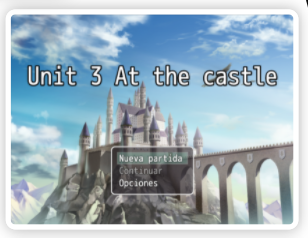
ROOFTOPS 5 - UNIT 3: AT THE CASTLE


ROOFTOPS 5 - UNIT 3: AT THE CASTLE

 VOCABULARY ANIMATION

CULTURE FILM

HOW TO ASK FOR AND GIVE DIRECTIONS

STORY: THE BLUE ROOM MYSTERY

SONG: THE PLACE WHERE I WAS BORN
GAMES


Wednesday, 21 April 2021

Rooftops 6 Unit 5: At the Market


Rooftops 6 Unit 5: At the Market


When we talk about objects, food, drinks, etc. there is something we should consider: Is it countable or uncountable?
But... What is "countable"?

COUNTABLE is a noun that we can count: Three dogs, eighty books, seven dwarves... "dogs", "books" and "dwarves" are countable nouns.

UNCOUNTABLE is a noun that we cannot count. "Seven money", "four water" are terrible mistakesđŸ˜± (we cannot count 'moneys' or 'waters').
We can, however, say "seven euros" or "four water bottles". By using more nouns we can turn an uncountable noun into a countable one.

We don't use these nouns in an isolated way. We usually need to use A/AN, SOME and ANY but... do you know when to use them appropriately?

Here's a video to help you with that:


Let's sum up this lesson with your favourite part; GAMES!


Countable or uncountable? 12 - Quizizz 12 
 Test Uncountables - Moonshot - Food
Fun Fair Quiz - Car Race - Much, many, too... - 
Aliens, Pirates & Crocodiles - Mix 
A, some, any - Dragon bite (for experts!)
Food Kangaroo - Baker game

Friday, 20 March 2020

March Activities: Stories in cartoons and TV

Stories – in films, books and TV series – are the inspiration for  March activities. At A1 Movers and A2 Flyers, we ask our younger students to write about their favourite character.

My favourite character
Level: A1 Movers / A2 Flyers
Content: description
Interaction: whole class and individual activity
Time: 55 minutes

Warm up (10’) – whole class
 Do you watch TV?
 How often do you watch TV?
 What’s your favourite TV programme? Why?
 When is it on?
 Do you like going to the cinema? Why (not)?
 Who do you go to the cinema with?

Writing (15’) – individually
Think about your favourite cartoon character. Write 5 sentences about them. Write about:
1. The programme or book the character is in
2. What the character is like (Is it an animal? Is it an object? What colour is it? Is it
young or old?)
3. What the character can / cannot do
4. Who its friends are and what they do together
5. Why you like it or what makes it special

Don’t include the character’s name

1. My favourite character is in …
2. It is …
3. It can … but it can’t
4. Its friends are … and they … together
5. I think it is very special because it…


Reading and listening (15’) – whole class
When students have finished, the teacher should put all the pieces of paper in a bag. Students
will take turns to read the little descriptions. After reading each description aloud, the rest of
the group will have to guess who wrote the description and who they think the character is.

Follow up (15’) – individually
Students can draw their favourite character. They can put the drawings on the wall and then
go around the class looking at each other’s drawings. They can ask and answer questions
about the drawings.

Extracted from  Cambridge Assessment English

Wednesday, 24 April 2019

A2 Flyers - Exam information

A2 Flyers is the third of three Cambridge English Qualifications designed for young learners. These tests introduce children to everyday written and spoken English and are an excellent way for them to gain confidence and improve their English.


Test format

A2 Flyers is made up of three papers developed to encourage and motivate young learners. You can see exactly what’s in each paper below. 
PaperContentMarks
Listening
(about 25 minutes) 
5 parts/ 25 questions a maximum of five shields 
Reading and Writing
(40 minutes) 
7 parts/ 44 questions 
a maximum of five shields
Speaking
(7–9 minutes) 
4 partsa maximum of five shields

At a glance

Word List and Word List Picture Book

The colourful A2 Flyers Word List Picture Book has many of the words children have to learn for the A2 Flyers test. 
The A2 Flyers classroom activities book will help children get better at English and learn new words. 

Download the A2 Flyers classroom activities book
The A2 Flyers progress charts for students and teachers will help motivate learners. 

Download the A2 Flyers progress charts

Speaking test videos with examiners' commentary

This video will help your students understand what happens during a speaking test. You can also download examiner comments for each video.

Free: Paper-based sample test

You can download the Listening sample tests from the introduction page of the sample papers.